Visiting Olbia
Best Time to Visit Olbia: Month-by-Month Guide
June or September? Olbia month by month: the sea, the crowds, what is open, and the one thing to check before booking outside the summer season.
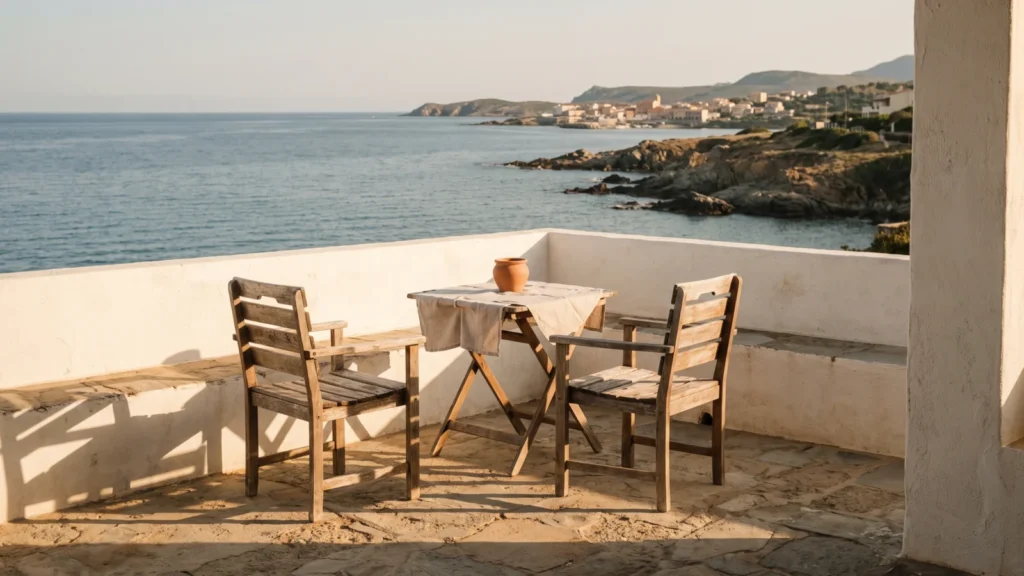
There is no single best month to visit Olbia, and anyone who gives you one is selling something. June and September are the best balance of usable sea and manageable crowds. July and August are the busiest part of the summer season, with everything open. Spring and October suit the city, the archaeology and walking, with the sea as a gamble. From November to February Olbia is an ordinary Sardinian town, which is either the point or a disappointment, depending on why you are coming.
What follows is what you gain and what you give up in each part of the year, so you can make the trade yourself.
What is the best time to visit Olbia?
It depends on one question: are you coming for the sea, or for the place?
If the sea is the reason, your window is roughly June to September, and the two shoulder months are better value than the two peak ones. If the sea is a bonus, the window widens enormously — and the city is genuinely more pleasant when you are not sharing it with August.
| Period | Weather | Sea | Crowds | Best for | What to know |
|---|---|---|---|---|---|
| March – April | Mild, changeable | Cold for most people | Low | Walking, archaeology, the countryside | Not a beach holiday. Check what is open |
| May | Warming | Still fresh | Low to medium | The city, and the patronal festival | Mid-May is festival week, which changes the town |
| June | Summer, not yet peak | Usable | Medium | Families, first-time visitors | The best all-round compromise |
| July – August | Full summer | At its warmest | Highest | Everything open, maximum choice of services | Book early; midday beach parking is the friction |
| September | Still summer | Warmest of the year, after a full summer | Falls away through the month | Couples, anyone free of school terms | The month people rebook |
| October | Mild | A gamble | Low | The city, museums, inland Gallura | Routes start thinning — check before booking |
| November – February | Winter, wind | No | Very low | Seeing Sardinia without tourism | Fewest connections; a car matters most here |
Olbia in spring
March and April are for people who want the place rather than the beach. The Gallura countryside is at its best, the archaeological sites are comfortable to walk around rather than punishing, and the city belongs to the people who live in it. The sea is there to look at.
May is when Olbia restarts. The days are long, the hinterland is still green, and the sea is warming without being warm. It is the month we would pick for anyone whose trip is built around what there is to see in the city rather than around swimming.
One date is worth planning around, or avoiding, depending on your temperament. Olbia’s patronal festival — sa festa manna de Mesu Maju — falls in mid-May and builds to 15 May. For that week the town is busy for reasons that have nothing to do with tourism, accommodation included. The Comune di Olbia publishes the dates and the programme each year; what actually happens during it is in our guide to things to do in Olbia.
Olbia in June
The best balance of the year, and the month we recommend most often.
The sea is usable, the flight and ferry network is already at summer width, the beaches are busy without being saturated, and prices have not yet reached their peak. For anyone travelling with children who is not tied to school holidays, June does nearly everything July does, with noticeably less friction.
The one thing June does not give you is the warmest sea of the year. That belongs to September.
Olbia in July and August
This is the busiest part of the summer season, and it is the version of Olbia most people picture.
What you gain: everything is open. Every beach service, every seasonal route, the fullest choice of flights and sailings, the longest evenings, the warmest water of the main season.
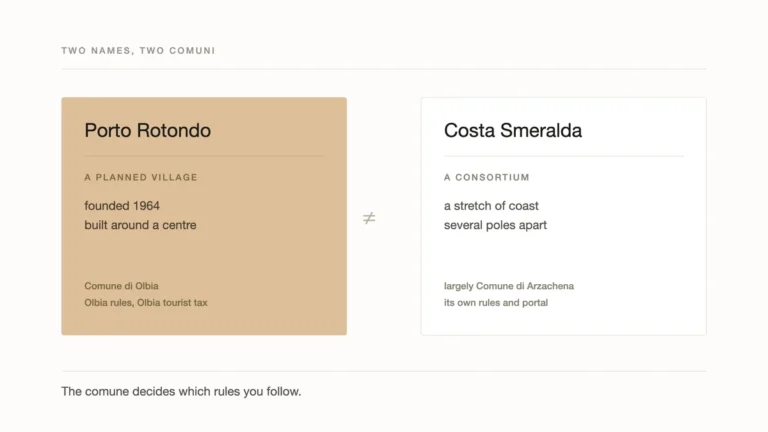
What you give up: space and flexibility. The middle hours concentrate crowds and fill beach car parks, accommodation needs booking well ahead, and the margin for changing your mind shrinks. Parking becomes a planning problem rather than a detail — Porto Rotondo’s parking zone, for instance, is charged through the summer season, which catches out day visitors.
If August is your only option, it is a perfectly good holiday. It is simply one that rewards deciding things early.
Olbia in September
The other balance month, with an advantage June cannot match: the sea has an entire summer behind it. Water takes longer to warm than air and longer to cool, which is why September is the month people quietly rebook for the following year.
Italian schools go back early in the month, so the family component thins out quickly after the first couple of weeks. Services are still running, the evenings are still long enough, and the beaches return to being places you can sit on.
If you have no school calendar to work around, September is the easiest recommendation in this article.
Olbia in October
October is where the holiday changes type rather than simply getting quieter.
Swimming becomes a gamble that some years pays off. The city, the museums, the inland Gallura and the walking, on the other hand, are at their best. Prices fall. The light is better than it is in August.
It is also the month where checking replaces assuming. Connections begin to thin, beach services start closing, and museums and sites move onto winter opening calendars. None of that makes October a bad month — it makes it a month you plan rather than improvise.
Olbia from November to February
Olbia goes back to being an ordinary Sardinian provincial town, with its ordinary life. Connections are at their fewest, most seasonal tourist services are shut, and the beaches are empty in the literal sense.
This is not a beach holiday and it would be dishonest to present it as one. It is a real option for anyone travelling for work, for anyone who wants to see the island without tourism, or for anyone with their own reasons to be here. The museums are indoors and open, and the city itself works normally.
Without a car, though, the winter radius shrinks sharply: getting around Olbia is straightforward inside the city all year, and much harder beyond it once the seasonal coastal services stop.
The wind matters more than the month
Gallura is windy all year, and the mistral rearranges a day far more effectively than the calendar does. The consequence worth knowing is geographical rather than seasonal: the town has coastline facing two different ways, so a wind that writes off one of them frequently leaves the other calm. A fallback beach is worth more than a long-range forecast in any month — our guide to the beaches near Olbia covers which side is which.
When should you visit Olbia for your type of trip?
Best for beaches. July and August for certainty, September for the warmest water with fewer people, June if you want both and will accept slightly less of each.
Best for fewer crowds. Late September and October, if you still want some summer. March to May if you do not need the sea at all.
Best for families. June, if your school calendar allows it. The sea is usable, the services are running, and the beaches have not yet reached their August density. What else changes when you travel with children is in our guide to Olbia with kids.
Best for exploring the area. Spring and October. Archaeological sites and walking are far better in mild weather than in the heat, and the roads are emptier — our guide to day trips from Olbia sets out where to point the car.
Best for a quieter stay. October onwards. You give up the sea and most beach services; you get the town, the museums and the prices.
Best if you do not have a car. The summer months, without much ambiguity. Olbia’s urban buses run all year, but the services that reach the coast are at their widest in the warm months. Out of season, a car stops being a convenience.
The one thing to check before booking out of season
Olbia’s airport is a seasonal airport serving a seasonal region. Geasar, the airport operator, lists a network of 62 destinations across 16 countries, reaching as far as New York. What that list does not tell you is which of those routes is flying in the week you want to travel: the network page itself already shows a destination with no airline currently available.
The same applies to some ferry routes. So between roughly November and March, and increasingly in late October, treat your route as something to verify rather than assume — our guide to how to get to Olbia sets out the options, but the operating calendar is the carriers’ to publish and ours to check.
We do not publish timetables or route lists here, because they would be wrong within a season.
Frequently asked questions
What is the best month to visit Olbia?
There is no single answer, but June and September offer the best balance between usable sea and manageable crowds. May and October are better if you are coming for the city, the archaeology and walking rather than for swimming. July and August have everything open and the heaviest demand.
Is September a good time to visit Olbia?
It is one of the most requested months, because the sea has a full summer of warmth behind it while the crowds thin out after the first weeks, once Italian schools go back. Conditions still depend on the year and on the wind, and nobody can guarantee them.
Can you swim in Olbia in June?
Generally yes — June is inside the usual swimming window, which is roughly June to September. The water is cooler than it will be in September, because the sea warms more slowly than the air.
Is Olbia busy in August?
August is the busiest part of the summer season. Accommodation needs booking well in advance, the middle of the day concentrates people on the beaches, and beach car parks fill. Everything is open, which is the trade.
Is October a good time to visit Olbia?
Yes, if you are not coming primarily to swim. The city, the museums and the inland Gallura are at their best, and prices are low. Connections and beach services begin to reduce, so October is a month to check rather than improvise.
Does Olbia close in winter?
No. The city functions normally all year and the urban buses run all year. What reduces is the tourist layer: seasonal beach services, some air and ferry routes, and the coastal bus services. Museums and sites move onto winter opening calendars.
Read also
- Things to do in Olbia: the city beyond the port
- The best beaches near Olbia, and how to reach them
- Where to stay in Olbia: the areas, and who each one suits
- How to get to Olbia: by plane, ferry or train
- All our English guides to Olbia and north-east Sardinia
Once you have the month, the next question is the area
When you come changes what you need from where you sleep. In July the question is parking and how far you are from a beach; in October it is whether you can walk to the museum and a restaurant that is still open. Our guide to where to stay in Olbia works through that area by area.
AirAffitti manages apartments and rooms in Olbia and Porto Rotondo. Tell us which month you are thinking of and we will tell you what to expect, what will be open and what will not — including when the honest answer is that another month would suit you better. You can also just see what we have available.
AirAffitti editorial team